
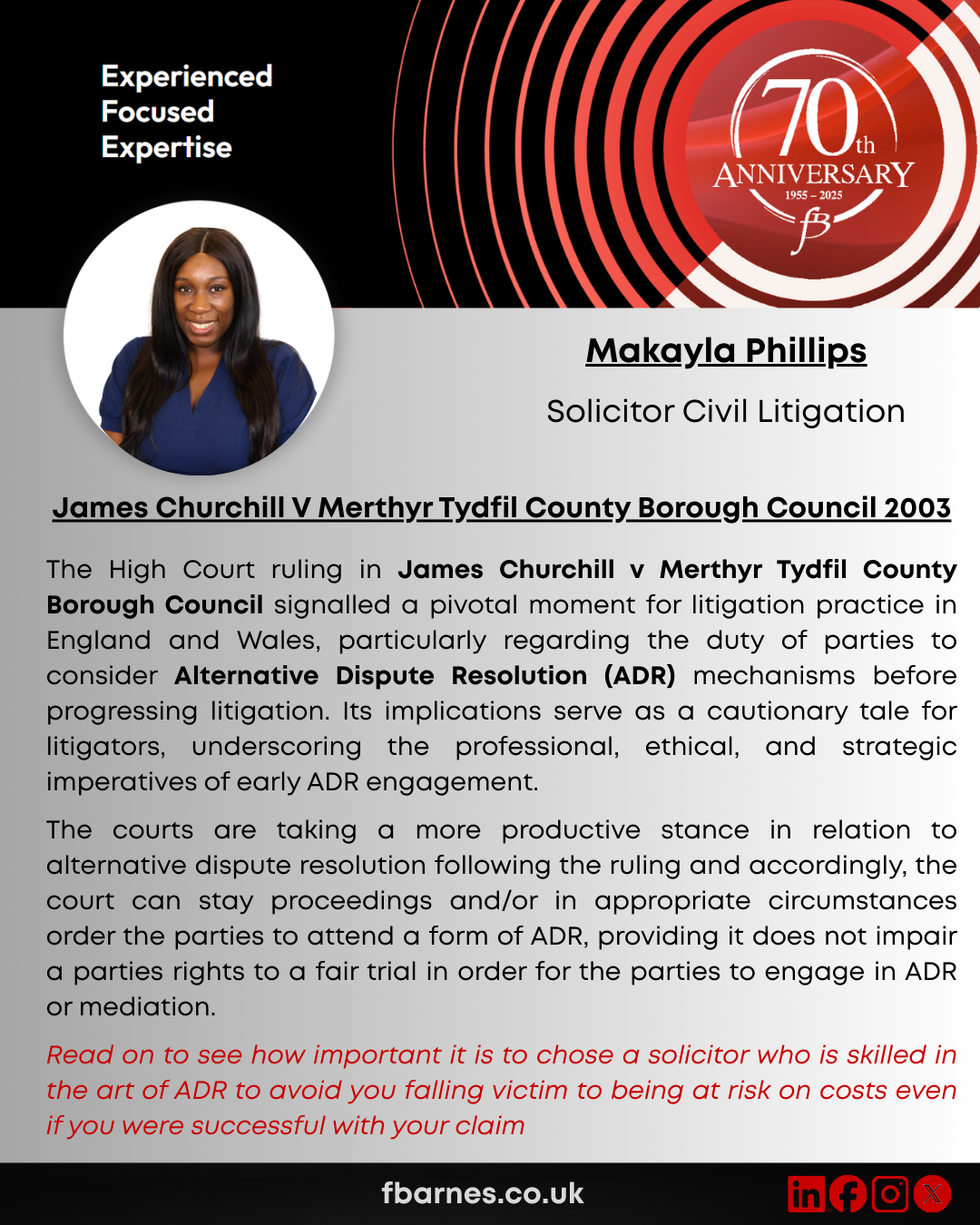
Following the ruling on the above case parties to a case need to be very mindful in refusing to engage in ADR ( Alternative Dispute Resolution). The context and implications of the ruling are:
That parties cannot ignore the availability of ADR—whether mediation, negotiation, or arbitration—as merely procedural steps. Judges are increasingly expectant that solicitors:
- Advise clients proactively on the feasibility and potential benefits of ADR.
- Document efforts to engage with adversaries constructively to avoid unnecessary court proceedings.
- Avoid tactical avoidance of ADR, which can reflect poorly on the solicitor and client’s willingness to resolve disputes reasonably.
Failure to demonstrate meaningful consideration of ADR, the judgment notes, can influence procedural costs and court perceptions of conduct, potentially attracting adverse costs orders or reputational consequences.
Accordingly, the court can stay proceedings in order for the parties to engage in ADR or mediation. Also, we need to be very mindful in refusing to engage in ADR. Any litigator should be astute to react to any mention of ADR.
Even if it is considered premature, we are under a duty to respond explaining why we hold this opinion. We must never ignore any reference to ADR because even if we are successful at the end, there is likely to be a cost risk.
Strategic Litigation Considerations
Litigators should integrate ADR into the case strategy:
- Early Case Assessment: Evaluate whether ADR could resolve or narrow issues. This includes advising clients on costs, timelines, likelihood of settlement, and confidentiality benefits.
- Negotiation Readiness: Prepare for dynamic ADR processes, including client preparation, the identification of non-monetary interests, and the selection of suitable neutrals.
- Cost Management: Courts may factor a litigator’s engagement with ADR into cost orders; proactive ADR use can prevent punitive costs or procedural criticism.
Skills and Mindset Shifts
The modern strategy of litigation demands that solicitors adopt counsellor and facilitator roles, rather than relying solely on adversarial prowess:
- Client Education: Ensure clients understand the distinctions between litigation and ADR outcomes, including potential BATNA/WATNA scenarios.
- Collaboration: Mediation, negotiation, and arbitration require tempered communication, emotional intelligence, and creative problem-solving.
- Documentation: Formal records of ADR attempts demonstrate compliance with judicial expectations emerging from Churchill.
Lessons from Case Study Evidence
- Success Rates: A significant proportion of disputes resolve successfully through ADR when litigators engage constructively.
- Efficiency: ADR can reduce litigation costs and court congestion, aligning with both client and public interest.
- Professional Reputation: Solicitors excelling in ADR cultivate reputational capital, enhancing long-term client trust.
Conclusion
The Churchill ruling crystallises the principle that ADR is not optional, but a necessary consideration for all civil litigators. Ignoring these processes risks:
- Adverse cost implications for the client
- Lost opportunities for client-centric, efficient dispute resolution.
F Barnes, a reputable firm of solicitors based in Romford and across Essex, offers tailored legal support to individuals contemplating litigation in England and Wales, particularly highlighting the importance of Alternative Dispute Resolution (ADR).
How can F Barnes Help ?
1. Strategic Legal Guidance on Disputes
- F Barnes advises individuals on a wide range of civil and commercial disputes, including contract issues, property disagreements, inheritance claims, and commercial litigation.
- They provide initial consultations to assess each case, explain available options, and identify whether litigation is the most appropriate route. Early assessment often includes consideration of ADR methods as a strategic alternative to formal court proceedings.
2. Encouragement and Facilitation of ADR
F Barnes assists clients in understanding and navigating these options:
- Mediation: A voluntary, confidential process where a neutral mediator helps parties reach a mutually acceptable resolution. F Barnes designs mediation strategies, particularly where preserving relationships is important, such as in family or trust disputes.
- Arbitration: A private, binding process in which parties appoint an arbitrator to resolve disputes. F Barnes ensures clients engage appropriate arbitrators, draft arbitration agreements, and manage proceedings that may have cross-border implications.
- By guiding clients through ADR, F Barnes helps to avoid unnecessary court costs, maintain confidentiality, and potentially achieve faster resolutions.
3. Compliance with Legal Duties on ADR
F Barnes advises clients on:
- Pre-action protocols: Outlining the steps to notify the opposing party and explore ADR.
- Appropriate ADR methods: Selecting mediation, arbitration, or other dispute resolution routes suited to the dispute’s nature, complexity, and time constraints.
- Documentation and strategic planning: Ensuring written communications and proposals comply with procedural expectations to avoid cost and procedural penalties.
4. Representation and Support Through ADR
F Barnes offers hands-on support during ADR, including:
- Preparing submissions for mediators or arbitrators.
- Representing clients in settlement discussions.
- Advising on the enforceability of agreements reached through ADR.
Their team includes accredited mediators, arbitrators, and adjudicators, allowing clients to leverage expertise and benefit from structured, legally sound ADR processes alongside potential litigation pathways.
5. Bridging Litigation and ADR for Optimal Outcomes
- F Barnes promotes a hybrid approach, first exploring ADR to resolve disputes, yet ready to proceed to litigation if necessary.
- This strategy narrows issues, reduces costs, preserves relationships, and ensures compliance with procedural duties, including the duty to consider ADR.
Conclusion
Individuals considering litigation in England and Wales can rely on F Barnes to provide comprehensive, strategic, and cost -effective advice. This includes evaluating whether ADR is suitable, facilitating mediation or arbitration, ensuring compliance with procedural duties, and representing clients throughout the ADR process and potential litigation. Their goal is to achieve efficient, fair, and private dispute resolution, minimizing stress and financial exposure for clients.
For tailored advice, F Barnes offers consultations to map out the optimal dispute resolution pathway while ensuring adherence to legal obligations regarding ADR.